

Grading Slabs vs Raw Cards: Which Is Better for Your Collection in 2026?
Should you grade that card, or leave it safely raw?
It is one of the most common questions in the hobby. Whether you collect collectible trading cards, rare sports cards, Pokémon, comics, or other pop-culture treasures, grading can make a card feel more official. But a slab is not automatically better, and grading is not automatically profitable.
The honest answer is: it depends on the card, your goals, and the math.
What is the difference between a graded slab and a raw card?
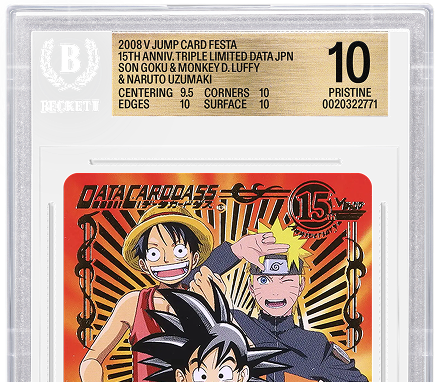
A raw card is an ungraded card in its original form. You might protect it in a penny sleeve, top loader, magnetic holder, binder page, or another storage product.
A graded card has been:
Authenticated
Examined for condition
Assigned a numerical grade
Encapsulated in a tamper-evident holder
The grade is one company’s assessment according to its own standards. A 9.5 from one grader is not automatically identical to a 9.5 from another. Grading companies may differ in how they evaluate centering, corners, edges, surface, alterations, and overall eye appeal.
Think of grading as a professional opinion sealed inside a plastic fortress, not a magical upgrade spell.
Why collectors choose graded cards
Grading can make sense when you want a card to be easier to authenticate, protect, display, organize, or sell.
Authentication
Authentication is especially important for valuable vintage cards, autographs, rare parallels, and cards where counterfeits or alterations are a concern.
Standardized presentation
A slab gives cards a consistent appearance. A graded collection can be easier to catalogue and display than a pile of top loaders that slowly develops its own ecosystem.
Physical protection
A slab offers more rigid protection than a penny sleeve and top loader. It can help protect against bending, handling, and some types of storage damage.
However, a slab is not invincible. It does not make a card immune to sunlight, heat, moisture, scratches, or poor storage. Even graded cards should be kept away from direct UV exposure.
Easier resale
Graded cards are generally easier for buyers to evaluate quickly. A recognized company, grade, certification number, and sealed holder can reduce some uncertainty during a sale.
That does not guarantee a higher price. Buyers still compare the exact card, grade, grading company, recent sold listings, and overall demand.
Why collectors keep cards raw
Raw cards have plenty going for them too.
They cost nothing to grade.
You keep the flexibility to grade later.
You can display more cards in less space.
They are easier to inspect and handle carefully.
They are often the better choice for lower-value cards.
They may be more suitable for personal or sentimental collections.
Some cards may not be eligible for a particular grading service.
If a card is a favourite because it reminds you of a player, Pokémon, childhood collection, or special pull, its value to you may matter more than its resale value. There is no grading company that can assign a number to nostalgia.
For most collections, a hybrid approach works well: keep many cards raw, and grade the special ones.
The 2026 grading-cost reality
Prices, service availability, declared-value limits, and turnaround estimates can change quickly. The following figures were published or verified in early October 2026. Always confirm the current details directly with the grader before submitting.
Grader | Selected published tier information |
PSA | Standard: $59.99, up to $1,000 insured value, estimated 90–100 business days. Express: $199, estimated 20–30 business days. Value and Value Bulk tiers are paused. Collectors Club membership is approximately $149–$199 per year. |
CGC | Bulk: $17, 25-card minimum, up to $500 value. Economy: $20, up to $1,000, around 90 days. Standard: $55, up to $3,000, around 10 days. Express: $100, up to $10,000, around 5 days. Members receive 10–20% grading discounts. |
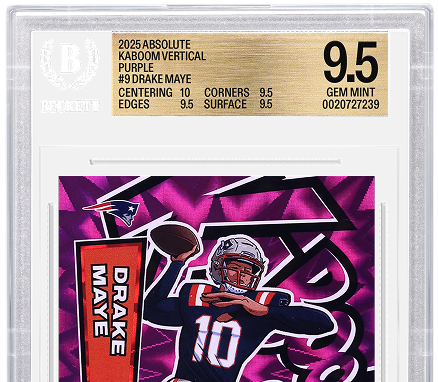
Beckett/BGS | Express is currently open at $79.95, with an estimated 15-business-day turnaround. Subgrades cover centering, corners, edges, and surface. A Black Label requires all four subgrades to be 10s. |
SGC | Standard: $50, up to $1,500 declared value, with 40+ business-day estimates. Expedited: $150, estimated at 2–3 days. No membership requirement. |
TAG | Base: $39.95, five-card minimum, estimated 60 days. Standard: $59.95. Premier: $299.95, estimated 3–5 business days. Pricing does not change with card value. TAG provides a digital report through a QR code, does not accept Yu-Gi-Oh!, and sports-card eligibility begins at 1989. |
Turnaround times are estimates, not guarantees. Shipping delays, intake backlogs, research requirements, holidays, service pauses, and upcharges can all affect the final timeline.
The grading math: calculate the all-in cost
The basic formula is:
Expected graded value − raw value − all-in grading cost = expected gain or loss
Your all-in cost may include:
Grading fee
Shipping to the grader
Return shipping
Insurance based on declared value
Membership cost, amortized across the cards you submit
Autograph or oversized-card fees
Add-on services
Possible value upcharge
Selling fees if you plan to sell afterward
For example, suppose a card is worth $100 raw. You estimate that it would be worth $180 as a 9 and $400 as a 10. If the all-in cost is $85, grading may make sense, but only if your expected grade supports the calculation.
Do not assume you will receive a 10. Estimate the grade you are realistically likely to receive. The price difference between adjacent grades can be large, especially for modern cards, rare sports cards, and high-demand Pokémon cards.
The other common mistake is focusing only on the advertised grading fee. A $20 fee can stop looking cheap once shipping, insurance, membership costs, and possible upcharges enter the picture.
What is a value upcharge?
A value upcharge happens when a grader determines that your card’s value is higher than the maximum value allowed by the service tier you selected.
For example, if you submit a card through a lower-priced tier and its post-grade value exceeds that tier’s ceiling, the grader may move it to a higher service level and bill the difference.
PSA states that it may move a card to a higher service tier if the post-grade value exceeds the tier limit. CGC also publishes a declared-value policy and may move a submission to the appropriate higher tier.
In other words, selecting the cheapest tier is not always a guaranteed price cap. Check each company’s current declared-value and upcharge policies before shipping.
Which grader should you choose?
There is no single best grader for every card.
PSA: Often considered when broad resale recognition and market liquidity are priorities.
CGC: May appeal to collectors looking for lower-cost bulk or economy options, especially for trading card games.
BGS: Worth considering when subgrades, detailed condition breakdowns, or Black Label potential matter.
SGC: Popular with some sports and vintage collectors, particularly those who value its presentation or expedited options.
TAG: Attractive to collectors who want a detailed digital report and data-driven condition information.
Collectors Holdings owns PSA, SGC, and Beckett. CGC and TAG are independent companies. There is also pending antitrust litigation, Rasmussen v. Collectors Holdings, with no confirmed ruling at the time of writing. This is a factual ownership and legal-status note, not a recommendation to choose or avoid any grader. Compare actual recent sold prices for your specific card and grade.
A quick decision checklist
Before grading, ask:
What is the card worth raw today?
What grade am I realistically expecting?
What is that exact card worth at the expected grade?
What is the complete all-in cost?
Could the card receive a lower grade than expected?
Is the card eligible for the service I want?
Would authentication or protection be valuable even if the resale gain is small?
Am I comfortable waiting through the estimated turnaround?
Would I still want the card if it receives a disappointing grade?
If the expected graded value remains higher than the raw value plus all-in costs, with a reasonable margin, grading may make financial sense. If not, keeping the card raw may be the smarter move.
FAQ
Is it worth grading a $50 card?
Sometimes, but usually not automatically. A $50 card can be worth grading if it has a strong chance of receiving a high grade, a major grade premium, sentimental importance, or meaningful authentication value. Include all shipping, insurance, membership, and selling costs before deciding.
How long does card grading take?
It depends on the company and service level. As of early October 2026, published estimates range from a few business days for expedited services to 90–100 business days or more for lower-cost tiers. Estimates can change and are not guarantees.
Do I need a grading-company membership?
Not always. PSA offers a Collectors Club membership, and CGC offers member discounts. SGC does not require a membership. Whether membership saves money depends on how many cards you plan to submit and whether the service you want is available.
What is a value upcharge?
It is an additional charge when the grader decides your card’s value exceeds the maximum allowed by the service tier you selected. The card may be moved to a higher tier and billed the difference.
The bottom line
Graded slabs are useful for authentication, protection, presentation, organization, and resale. Raw cards are useful for flexibility, affordability, storage efficiency, and personal collecting.
Neither is universally better.
At Box Of Cards, we have been helping collectors shop and build collections since 2002. We focus on sports cards and Pokémon products, along with comics, Funko Pops, movie collectibles, and more. If you are searching for a trading cards shop, a sports cards store near me, or a local hobby shop sports cards destination, come visit us and talk through your card.
Bring your questions, your checklist, and maybe the card causing the grading dilemma. We can help you think through the decision and let you know what help may be available in store. We do not promise a grade, a sale price, or a return, but we are always happy to talk cards.
Browse the Box Of Cards blog, explore available sports card products, or visit boxofcards.ca for more information.

Comments